
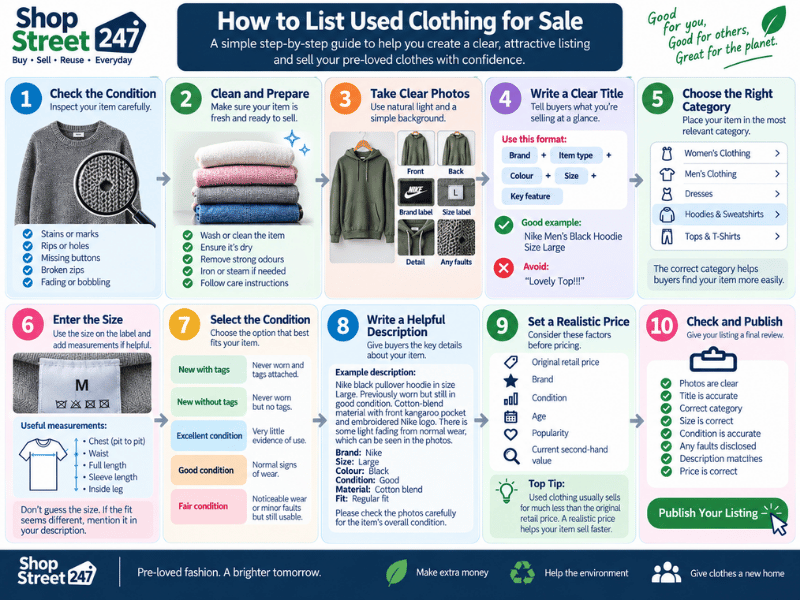
How to List Used Clothing for Sale: A Simple Step-by-Step Guide
Got clothes sitting in your wardrobe that you no longer wear? Selling your pre-loved clothing is a great way to make some extra money, clear some space and give perfectly usable items a second life.
A good listing can make all the difference. Clear photos, an accurate description and a realistic price help buyers understand exactly what they’re purchasing and can increase your chances of making a sale.
Whether you’re selling a designer jacket, a pair of jeans or a jumper you’ve simply stopped wearing, here’s how to create a great used-clothing listing on Shop Street 247.
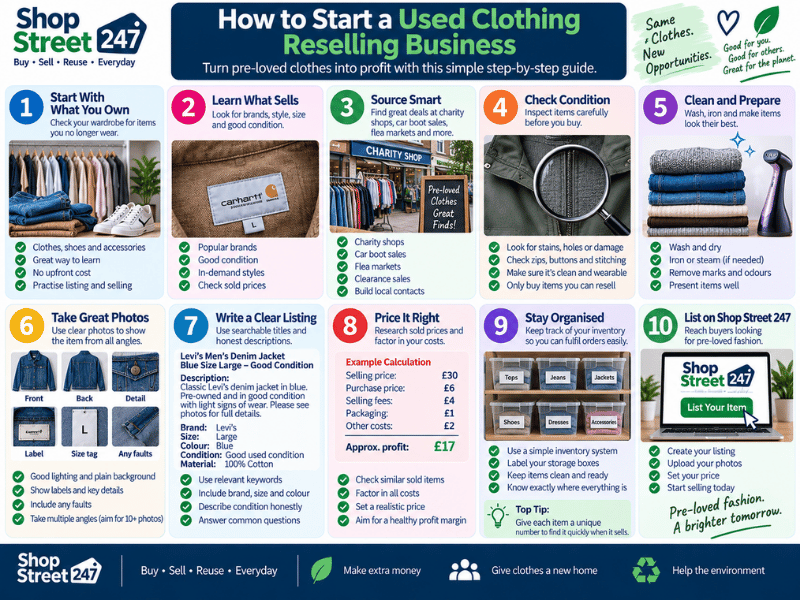
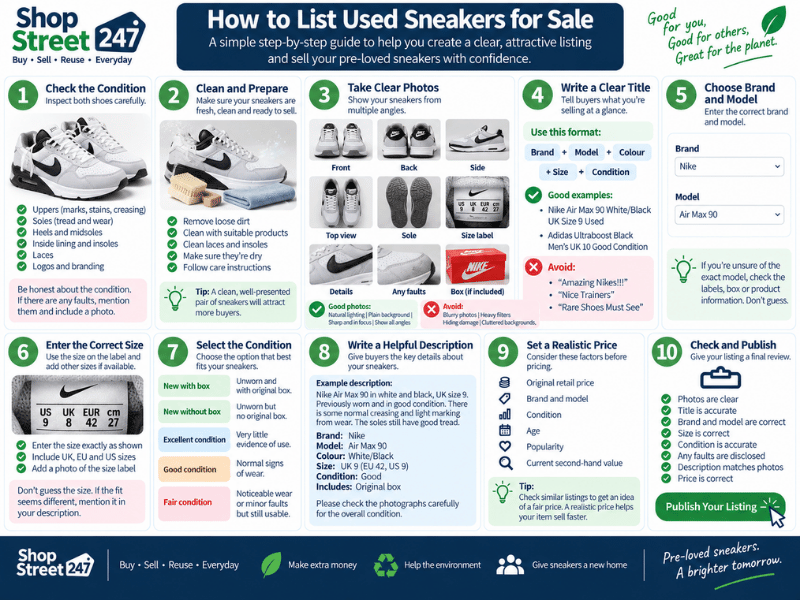
1. Check the Condition of Your Clothing
Before you take any photos, inspect the item carefully.
Look at the front, back, inside, seams, pockets, buttons and zips. Check for:
- Stains or marks
- Rips or holes
- Fading
- Bobbling
- Loose stitching
- Missing buttons
- Damaged zips
- Other signs of wear
Used clothing doesn’t need to look brand new. Normal signs of wear are expected when buying pre-loved items.
What’s important is being honest about the condition.
If you find a fault, don’t hide it. Mention it in your description and include a clear photograph so the buyer can make an informed decision.
Seller Tip
Honest listings build trust. A buyer who knows exactly what to expect is more likely to have a positive buying experience.
2. Clean and Prepare the Item
Presentation matters.
Where appropriate, wash or clean the item according to its care instructions before photographing and selling it.
Make sure your clothing is:
✓ Clean
✓ Dry
✓ Free from strong odours
✓ Presentable
✓ Ready for its next owner
You may also want to carefully iron or steam suitable garments so they look their best in your photographs.
Always follow the care label and avoid doing anything that could damage the garment.
3. Take Clear, Helpful Photos
When shopping for second-hand clothing online, buyers can’t pick up the item and examine it themselves.
Your photographs need to do that job for them.
Use good lighting—natural daylight is ideal—and photograph the item against a simple, uncluttered background.
Try to include photos of:
Front of the item
Show the entire garment clearly.
Back of the item
Let buyers see the complete item from behind.
Brand label
Photograph the label so buyers can verify the brand.
Size label
Show the labelled size clearly.
Material or care label
This can help buyers understand what the garment is made from and how it should be cared for.
Important details
Show logos, embroidery, pockets, buttons, patterns or other features.
Any faults
Include close-up photos of stains, fading, pulls, holes or other signs of wear.
Avoid
✗ Blurry photographs
✗ Very dark photographs
✗ Cluttered backgrounds
✗ Filters that change the item’s colour
✗ Hiding imperfections
Your photos should give buyers a realistic impression of the item they’ll receive.
4. Create a Clear Listing Title
Your title should tell buyers what you’re selling at a glance.
A simple formula is:
Brand + Item Type + Colour + Size + Key Feature
For example:
Nike Men’s Black Pullover Hoodie Size Large
Zara Women’s Floral Midi Dress Size 12
Levi’s Men’s Blue Straight Leg Jeans W34 L32
This is much more useful than titles such as:
“Lovely Top!!!”
or
“Amazing Jacket Must See”
Specific titles also make it easier for shoppers to find relevant items when searching.
5. Choose the Correct Category
Place your item in the most appropriate category available.
For example:
Women’s Clothing → Dresses → Midi Dresses
or:
Men’s Clothing → Hoodies & Sweatshirts
The more accurate your category, the easier it is for interested shoppers to discover your item.
6. Enter the Correct Size
Use the size printed on the garment’s label whenever possible.
Don’t guess the labelled size.
Depending on the garment, it may also be helpful to provide measurements such as:
- Chest / pit-to-pit
- Waist
- Full length
- Sleeve length
- Inside leg
If you think the garment fits differently from its labelled size, mention this in the description.
For example:
“Labelled size Medium. In my opinion, the fit is slightly oversized. Please check the measurements before purchasing.”
Measurements are particularly helpful when selling vintage or older clothing, where sizing may differ from modern garments.
7. Describe the Condition Accurately
Choose the condition that best represents the item you’re selling.
New With Tags
Never worn and the original retail tags are still attached.
New Without Tags
Never worn but the original retail tags are no longer attached.
Excellent Condition
Previously worn but showing very little visible evidence of use.
Good Condition
Used and showing normal signs of wear.
Fair Condition
Showing noticeable signs of wear or minor faults but still usable.
Your photographs and description should support the condition you’ve selected.
If you’re unsure between two conditions, avoid making the item sound better than it really is. Give buyers enough information to judge the condition for themselves.
8. Write a Helpful Description
A good description doesn’t need to be long. It needs to be useful.
Tell buyers the things you’d want to know if you were considering purchasing the item yourself.
Include information such as:
- Brand
- Item type
- Size
- Colour
- Material
- Fit
- Condition
- Features
- Measurements where useful
- Signs of wear or faults
Example Used-Clothing Description
Nike black pullover hoodie in size Large.
Previously worn and still in good condition. Cotton-blend material with a front kangaroo pocket and embroidered Nike logo.
There is some light fading from normal wear, which I’ve shown in the photographs.
Brand: Nike
Size: Large
Colour: Black
Condition: Good
Material: Cotton blend
Fit: Regular
Please check the photographs carefully for the item’s overall condition before purchasing.
A straightforward description gives potential buyers useful information without exaggerating the condition of the item.
9. Be Upfront About Faults
Don’t worry if an item isn’t perfect.
There can still be buyers for clothing with signs of wear, particularly if the price reflects its condition.
The important thing is disclosure.
For example:
“Small mark near the bottom of the left sleeve. Please see photo 6 for a close-up.”
This is much better than simply saying:
“Used condition.”
Pointing buyers directly to the relevant photograph makes the listing clearer and reduces the possibility of misunderstandings later.
10. Set a Realistic Price
Now it’s time to decide how much you’d like for your item.
Consider:
Brand — Some brands retain more second-hand value than others.
Original retail price — What did the item cost when new?
Condition — An item in excellent condition may be worth more than one showing considerable wear.
Age — This can affect value, although some vintage items may be particularly desirable.
Popularity — Certain styles, brands and products may attract more demand.
Second-hand value — Look at comparable pre-loved items to get an idea of a reasonable asking price.
Try not to base your price entirely on what you originally paid.
The question is:
What is someone realistically likely to pay for this item in its current condition?
11. Check Everything Before Publishing
You’re almost ready to sell.
Before publishing your listing, give it one final check.
Your Listing Checklist
☐ Photos are clear and show the whole item
☐ Brand and size labels are visible where possible
☐ Title accurately describes the item
☐ Correct category has been selected
☐ Size is correct
☐ Condition is accurate
☐ Any faults have been disclosed
☐ Description matches the photographs
☐ Price is correct
If everything looks right, your item is ready to be listed.
Give Your Clothes a Second Life
That jacket you haven’t worn for two years might be exactly what somebody else is searching for.
Selling pre-loved clothing isn’t just about clearing your wardrobe. You can make some extra money while helping usable clothing find a new owner.
And the better your listing, the easier it is for buyers to understand exactly what they’re getting.
So check your wardrobe, find something you no longer wear, take some great photos and get it listed.
Ready to Sell?
List your pre-loved clothing on Shop Street 247.
Buy • Sell • Reuse • Everyday